
Key Word Sign
At Small Sprouts Therapy, we’re always learning and growing our therapy toolkit. Recently, our Speech Pathologists upskilled in a Key Word Sign (KWS) workshop, allowing us to offer even more flexible, evidence-based ways to support your child’s communication both in therapy sessions and in everyday life.
So, what did we learn?
What is Key Word Sign?
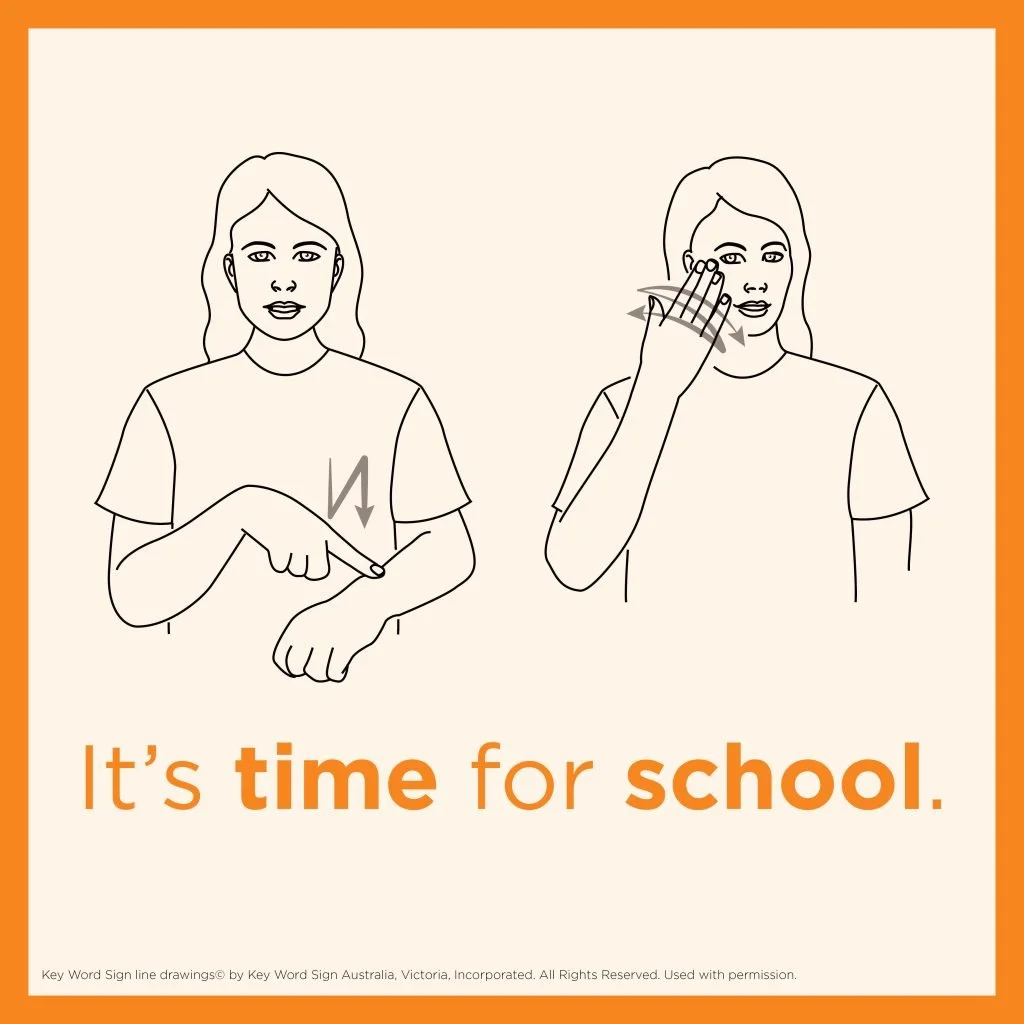
Ever noticed how you naturally use your hands when you talk? You might gesture stop, drink, or open and shut without even thinking about it. Gestures are one of the earliest ways humans communicate, and we continue to use them every day.
Key Word Sign builds on this natural skill by adding simple signs to the key, important words in spoken language. Adults continue to speak in full sentences, but signs are used only for the most meaningful words not every word.
Your child still hears the spoken language, but now they can see it too, making messages easier to understand, remember, and use themselves.
How does Key Word Sign help?
Key Word Sign supports communication while speech continues to develop. Research shows it often supports speech development by reducing frustration and giving children a way to communicate when they don’t yet have the words.
It’s important to know that Key Word Sign is not Auslan. Auslan is a complete language designed for people who are Deaf or hard of hearing.
Key Word Sign is:
Not a sign language
Not a simplified version of Auslan
Not intended to be a child’s only way of communicating
Instead, it’s used alongside speech to support understanding, expression, and confidence, giving children more than one way to get their message across.
The Key Word Sign approach
The core principles of Key Word Sign can be remembered with the word SIGN:
S – Speak and sign at the same time
Spoken words and signs are used together.I – Important words are signed
Only the key words are signed, not every word.G – Gesture when you communicate
Use your hands, head, and body to add meaning.N – Non-verbal communication matters
Facial expressions, eye gaze, and body language support understanding.S – Slow down
Take your time so messages are clear and easy to process.
Who is Key Word Sign for?
Key Word Sign can benefit people of any age who experience communication difficulties.
It can be particularly helpful for children who are:
Late talkers
Neurodivergent
Diagnosed with Down syndrome, intellectual disability, cerebral palsy, or selective mutism
Using AAC
Recovering from stroke
Finding communication harder when tired, overwhelmed, or unsure how to express their needs
It also supports parents, educators, and peers by making communication clearer and more consistent.
Does signing delay speech?
This is a common question and the answer is no. Evidence shows that using Key Word Sign does not stop children from talking. In fact, it often:
Reduces frustration
Supports understanding
Encourages communication
By giving children a successful way to communicate, speech is often supported rather than delayed.
Why we love Key Word Sign
At its core, Key Word Sign is about inclusion. It recognises that communication looks different for every child and that all forms of communication are valid. When children feel understood and supported, confidence grows and communication follows.
If you’d like to learn how Key Word Sign might support your child, chat with your Speech Pathologist or visit the Key Word Sign Australia website for more resources:
👉 https://kwsa.org.au/